HEY/I · EPISODE 2 · WHAT AI ACTUALLY COSTS

AI Is Free. Until It Isn’t.

Written by Danny Malouin.
Published September 21, 2026. Last updated September 22, 2026.

Ask anyone what AI costs and they say twenty bucks. Ask them what they paid last month and watch them open their banking app. Then ask what their last laptop cost, what their Office subscription costs now versus two years ago, and how many evenings they spent teaching a chatbot to do a thing they used to just do. This episode is about all of those numbers, and about why they only go one way.

Humanoid robot cashier counting bills at a store register, the real cost of AI in Hey I Episode 2 on Beep Digital

Hey / I

Last time I promised we would go into one room and stay there. So here we are. It is the cash register, because every other room in the store bills through it.

Here is the thing I want you to hold onto for the whole read. The price on the box is the smallest number in the story.

The real cost of AI is a ladder. You climb it one easy rung at a time, and you never decide to. Then there is a second set of costs that never show up under “AI” on any statement. The software you already had. The computer you will have to replace. The hours you spend learning. The arguments at the dinner table.

And underneath all of it there is a reason the ladder keeps getting taller. The stuff it runs on is not infinite.

Let us start with the part you can see.

THE LADDER, VERSION ONE

You

It does not take much to realize the free version is limited. You hit a wall in the middle of something useful. And since February 9, 2026, the free version of ChatGPT and the cheap Go tier come with ads, at least in the United States for now.[1] OpenAI’s own explanation is refreshingly blunt. The company is not profitable, the free tier costs real money to run, and ads pay for it.[2] Free was never free. It was a trial with a delay.

So you go Pro. ChatGPT Plus is about $30 Canadian a month. Claude Pro and Google AI Pro are about $20 US.[3][4][5] Now add 15 to 20 percent for the exchange rate, the provincial tax, and the 2.5 to 3 percent your bank quietly tacks on for a foreign transaction. The “$20 plan” is closer to $35 on your statement.[3]

Then you meet the second wall, and this is the one nobody warns you about. Pro is not unlimited. It is a budget. On Claude it resets every five hours and there is a separate weekly cap on top. On ChatGPT it is the same idea with different numbers.

And the same message costs more or less of your budget depending on how long the conversation already is, what files you attached, which model you picked and how hard you asked it to think. Two people can hit the wall on the same afternoon and neither one knows why.[6] Then the little message shows up. You have hit your limit. Come back at four.

Or.

Nobody re-subscribes on principle. What actually happens is you open the other chatbot because it is right there, and it is free, and you notice it is better at the one thing you were doing. A month later you have two. Then the second one hits its wall too.

Bango studied paying AI subscribers in late 2025. They use four different AI tools on average and spend about $65 US a month across them. Seventy-seven percent said the subscriptions are now essential to their everyday life.[7] Bank of America looked at actual card data through February 2026. Only about 3 percent of American households pay for AI at all, and the median payer spends $20 a month. But the group spending $21 to $40 grew 50 percent in two years, and 7 percent of payers now spend more than $100 a month.[8] The pool is small. The people in it are climbing.

Rung 0

Free

Limited fast. Ads on ChatGPT Free and Go since February 2026. A trial with a delay.[1]
Rung 1

Pro, about $30

The $20 US sticker lands closer to $35 on a Canadian statement after exchange, tax and the bank’s markup.[3]
Rung 2

The wall

Five-hour windows, weekly caps, and a budget that drains faster the longer the chat gets. Come back at four.[6]
Rung 3

The second chatbot

Paying subscribers use four AI tools on average and spend about $65 US a month across them.[7]
Rung 4

Credits

Top-ups drawn once the plan runs out. ChatGPT credits expire after twelve months. Claude offers auto-reload.[9][10]
Rung 5

Max, $100 to $200

Five or twenty times the usage. Same features, more turns. The $200 ChatGPT tier paused new sign-ups on September 10.[11]

Rung four is credits. Both stores now sell the same thing when you hit the wall. A top-up. On ChatGPT you buy credits that only get used once your plan runs out, and they expire after twelve months.[9] On Claude it is called extra usage, a separate balance with an auto-reload option, and a $20 top-up lasts anywhere from two days to six weeks depending on what you do with it.[10] This is the exact moment your subscription stops being a subscription and becomes a utility bill.

Rung five is the top of the consumer ladder. ChatGPT Pro at $100 US for five times the usage of Plus, or $200 for twenty times. As of September 10 OpenAI has paused new sign-ups for the $200 tier, which tells you something about demand.[11] Claude Max starts at $100. Google’s Ultra plan is $100 or $200.[4][5] Notice what happened on the way up. The price doubled, then multiplied by ten, and the product did not change. Same features. More turns. You changed.

Kitchen-table version: there are four phones in your house and every one of them is somewhere on this ladder, and nobody has compared notes. A five-minute audit of who pays for what is the most profitable thing your family will do with AI this month.

THE LADDER, VERSION TWO

The small business

Same ladder, ten people wide.

What the owner thinks it costs: ten Pro seats. ChatGPT Business is about $35 Canadian per user. Claude Team is about $25 US. Gemini inside Google Workspace is about $30 Canadian.[3][4] Microsoft 365 Copilot runs roughly $20 to $30 US per user depending on the plan and the promotion of the month. And you cannot buy it without already paying for a Microsoft 365 licence underneath.[12] Call it $300 to $400 a month for ten seats. Not nothing. Manageable.

What the invoices say is different. Cledara, a company that manages software spending, pulled real numbers in March 2026. Companies with fewer than fifty employees spend $500 to $3,000 US a month on AI. The average company runs 3.7 AI subscriptions and the aggressive ones run up to sixteen. AI spending grew more than 100 percent year over year, against 19 percent for every other kind of software.[13]

The ten-seat plan is the floor. Then someone hits the wall in the middle of a client deadline. An admin who does not want to be the person who said no turns on credits. Three months later the line item is in the hundreds.

What the owner budgets
$300 to $400
a month for ten Pro seats. The number on the box.[3][4][12]
What the invoices say
$500 to $3,000
US a month for companies under fifty people, across 3.7 AI subscriptions on average.[13]
The rework bill
5x
the software bill. Close to $200 US per employee per month of cleanup after AI-generated junk.[16][17]

Here in Canada, 19.2 percent of businesses were using AI in the second quarter of 2026, up from 6.1 percent two years earlier. When Statistics Canada asked what stops the rest, cost came second at 10.6 percent, right behind privacy at 13.4.[14] When American small business owners were asked what they spend, a third said nothing, 28 percent said $25 to $99 a month, 16 percent said $100 to $249, and one in ten said $250 or more.[15] That survey is what owners say. Cledara is what the invoices say. The gap between those two is the whole point of this section.

And the invoice is still not the bill. Here are the rungs nobody budgets, in order of how much they hurt.

Training hours. Among large Canadian companies using AI, 68 percent trained their staff on it. Among small ones, 24 percent did.[14] The tool is cheap. Learning it is not. And the small shop skips the learning, which is exactly why the seat goes cold after two months.

Rework. Researchers at Stanford and BetterUp surveyed 1,150 American desk workers in the fall of 2025 and gave a name to the thing you have already received in your inbox. Workslop. AI-generated work that looks fine and is not. Forty percent had received some in the previous month. Each piece took nearly two hours to sort out, and they put the cost at close to $200 US per employee per month.[16][17] For our ten-person shop that is close to $2,000 US a month of cleanup, against a subscription in the $300s. The rework bill can run five times the software bill, and it is invisible because it is paid in other people’s afternoons.

Lock-in. Copilot needs Microsoft 365. Gemini needs Workspace. The AI seat quietly becomes the reason you can never leave the suite.

Data. Where does the customer list go when your bookkeeper pastes it into a chatbot. I covered this in Episode 1 and I will not repeat it, except to say the answer is usually “a server in another country” and the price of that is not on any invoice.

The pilot that never pays. MIT’s NANDA lab looked at $30 to 40 billion US of corporate spending on generative AI in 2025. Ninety-five percent of organizations had nothing to show for it on the profit and loss statement.[18][19] Gartner predicts more than 40 percent of the “AI agent” projects being built right now will be cancelled by the end of 2027.[20]

Now the fair part, because I promised you honest and not just scary. Among small businesses that do use AI, 52 percent say the return is positive and 48 percent say it saves them four or more hours a week.[15] It works. For about half. The other half paid for the lesson, and the lesson was mostly the rungs above.

Danny Malouin

My opinion: a training budget with a subscription attached

Opinion

For a small business, AI is a training budget with a software subscription attached, not the other way around. If you are not going to pay for the hours, do not pay for the seats.

THE LADDER, VERSION THREE

Anyone who builds

This is the rung I live on, and it is where the ladder stops being a ladder and becomes a meter.

Anyone who ships something that uses AI, a chatbot on a website, an intake form, a tool that reads documents, an app, pays by the token. A token is about three quarters of a word. You pay for every token the machine reads and every token it writes back. The prices are quoted per million of them and they look tiny.

OpenAI’s current flagship costs about $5 US per million tokens in and $30 per million out. The mid-tier is a couple of dollars in and about $12 out. The cheap one is pennies.[21] Anthropic’s range runs from about $1 in and $5 out for the small model, up to $10 and $50 for the biggest one. And the newer models produce about 30 percent more tokens for the same text, so the same job costs more than it did.[22] Voice is a different league, several times the price of text.[21]

Here is why tiny becomes thousands. Every single turn of a conversation sends the whole conversation again. Plus the files. Plus the results of every tool the model used. Plus the model’s own thinking, which is billed as output.

Anthropic’s own documentation for developers says it plainly. A one-line question in a session that has been open all day still pays for the whole day.[23] And if you set up several AI agents to work together, the same documentation says to expect about seven times the tokens of a normal session.[23]

One developer, one day
About $15
US per active day on Anthropic’s coding tool, $150 to $250 a month. Ninety percent of users stay under $30 a day.[23]
Agents working together
7x
the tokens of a normal session, per Anthropic’s own documentation.[23]
Same bot, one dropdown
$1,000 or $5,000
US a month for 10,000 conversations, depending only on which model you picked.[22]

Anthropic publishes a benchmark for what a working developer burns using its coding tool: about $15 US per active day, or $150 to $250 a month, with 90 percent of people staying under $30 a day.[23] That is one person, working, with every efficiency turned on.

Now put the same meter behind a chatbot on your website. It is no longer you typing. It is your customers typing, on your bill, at 2 a.m., asking the same question four different ways.

Let me do the math for one imaginary bot. Say it handles 10,000 conversations a month, and each one, with a few tool calls and a bit of back and forth, runs about 50,000 tokens. That is 500 million tokens. On a mid-tier model that is about $1,000 US a month before you count the output. Pick the top model from the dropdown instead and the same bot costs $5,000. Same bot. Same customers. One dropdown.[22] I am rounding hard and your numbers will differ, but the shape is right.

And then there is auto-reload. Every credits system offers it. It is the feature that turns “we hit the limit” into “we found out on the statement.”

Danny Malouin

My opinion: the meter is the first honest price

Opinion

The token meter is the first honest price in this entire post. It is what AI actually costs, per unit, right now. Everything above it, every $20 and $30 and $100 plan, is a flat fee designed to hide it.

Kitchen-table version: the app your kid uses that “talks” is running a meter somewhere and somebody is paying it. If the app is free, go back to rung zero and re-read the part about ads.

THE OTHER ROOMS

The rooms you did not know you were paying in

In Episode 1 I said AI is a store with six rooms and the chatbot is just the shop window. Same thing with the bill. The chatbot bill is the one you can see. Here are the ones you are already paying without an “AI” line anywhere.

Room one

The software tax

Microsoft 365 Personal up about 40 percent in January 2025 because Copilot was “included.” Business plans up again in July 2026.[24][26]
Room two

The computer

Memory prices up roughly 500 percent in twelve months as AI data centres outbid consumers for chips.[28]
Room three

The hours

Three quarters of small Canadian businesses do no AI training. The learning happens anyway, in evenings.[14]
Room four

The attention

The group chat argument, the relative who thinks it is a person. No number exists. Still a payout.

The tax on software you already had. In January 2025 Microsoft raised the price of Microsoft 365 Personal from about $7 to $10 US a month and Family from about $10 to $13. That is a 30 to 40 percent jump. The reason given was that Copilot, Microsoft’s AI, was now included. Whether you asked for it or not.[24][25] There is a “Classic” plan without the AI at the old price, but you have to know it exists and go looking for it.

Then in July 2026 the business plans went up too. The basic plan up about 15 percent, the standard one about 10, and the cheapest frontline worker plan up a third. Microsoft’s justification was “everything we have shipped across AI, security and IT management.”[26]

I have watched the same move in the design tools, the note-taking apps, the meeting software and the CRMs I use with clients. An AI feature appears. A price increase follows the same year. You did not climb a rung. The rung climbed you.

The computer you will have to replace. This one surprised me. The memory chips inside your laptop and your phone are the same kind of thing the AI data centres are buying by the truckload. And the data centres are winning the bidding war. In January 2026 CNBC reported that AI memory was simply sold out.[27]

By the summer, TrendForce, the industry’s price tracker, reported memory prices up about 60 percent in a single quarter and roughly 500 percent over twelve months, as much as ten times the lowest prices ever recorded. A basic memory upgrade for a desktop PC was suddenly a few hundred dollars. The manufacturers were openly shifting production to the high-margin server chips and passing the cost down to laptops and phones.[28] The only reason the surge started cooling was that consumers hit the ceiling of what they would pay.

So the next time you price a laptop and it feels wrong, that is the AI bill. It just arrived through the back door, from a data centre in Texas, and it will never be labelled as such.
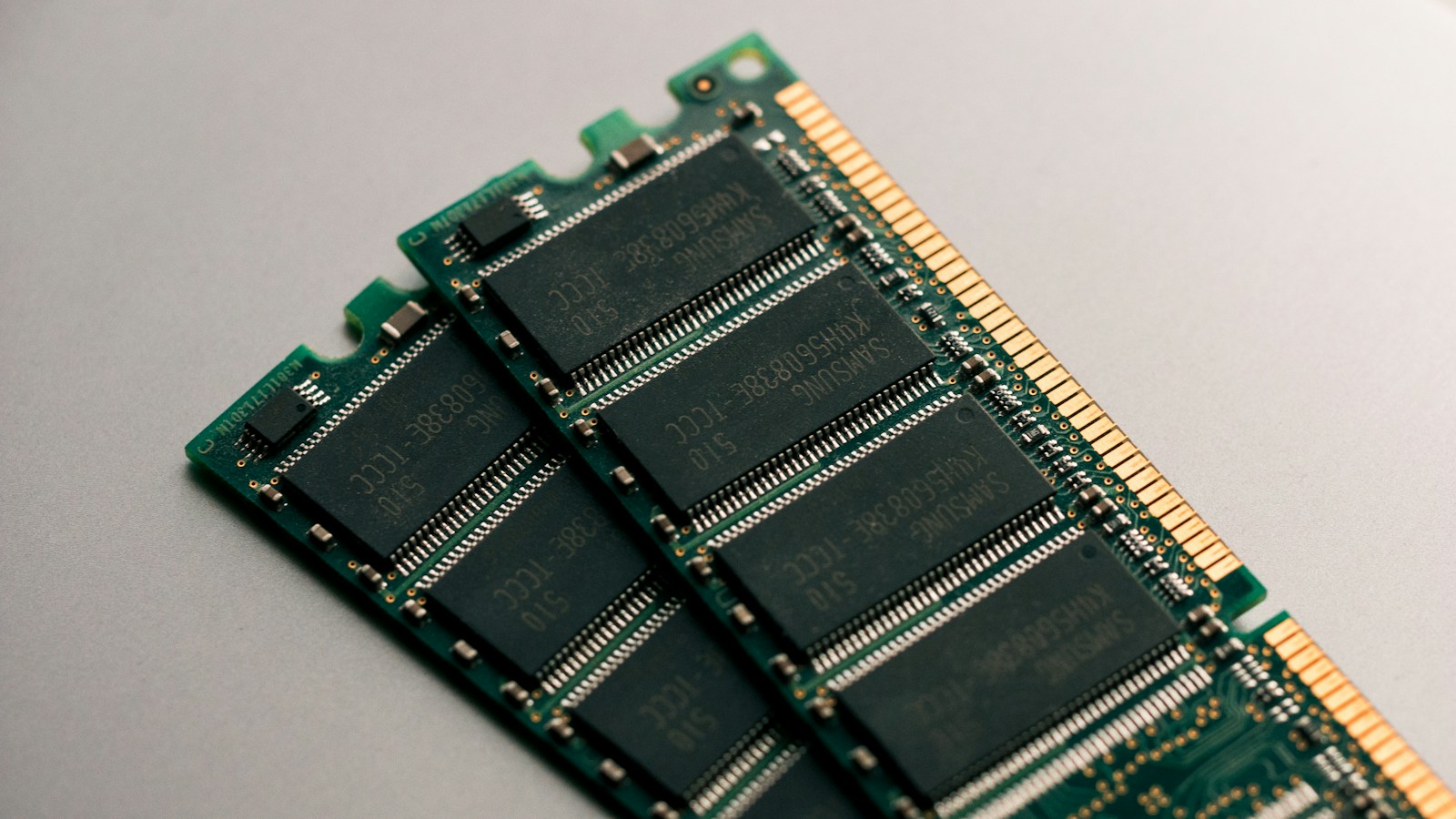
Close up of computer memory modules, the RAM price surge is part of the real cost of AI in Hey I Episode 2

The hours. Learning differently is time, and time is the one currency in this post that nobody tracks. Remember that 24 percent training figure for small Canadian businesses. It means the other 76 percent are paying for the training anyway, in evenings, with no receipt.

Parents are learning enough about these tools to police homework. Teachers are learning on the job. Only about half of Canadian grade 6 to 12 teachers have had any AI training at all, and two thirds of their schools have no staff policy on it.[29] Ask yourself how many hours you spent last month getting an AI tool to do a thing you used to just do. That number is real and it is not on any statement.

The attention. The argument in the group chat about whether AI is stealing jobs. The relative who thinks it is a person. The mental load of not being sure whether the thing you just read was written by anyone at all. This one is pure opinion and nobody has a number for it. It is still a payout.

THE ENERGY LENS

Why it only goes up

Let me be clear about something before this section, because it is easy to get wrong. You do not pay Hydro-Québec for ChatGPT. The data centre’s power bill is inside your $30, in theory, the same way the coffee shop’s rent is inside your latte. So why bring energy up at all?

Because the inputs are finite, they are getting more expensive, and every rung of the ladder above is the mechanism for passing that along to you. If you want to understand why the wall keeps moving, and why the $20 plan is quietly becoming a $100 plan, you have to look at what it runs on.

First the number that is smaller than you think. Google measured it in August 2025. A typical text prompt to Gemini uses 0.24 watt-hours of electricity, about five drops of water, and 0.03 grams of CO2. Roughly one second of running your microwave. And it was 33 times more a year earlier.[30][31] For scale, if you sent a hundred prompts a day, every day, for a year, that is under nine kilowatt-hours. At Hydro-Québec’s residential rate that is well under a dollar.[32] Your prompt is not the problem.

Two caveats Google’s own critics raised. That number is text only; images and video cost far more and were not published. And Google did not say how many prompts a day it serves, so nobody outside can do the multiplication.[30]

One text prompt
0.24 Wh
about one second of a microwave. A hundred prompts a day for a year is under a dollar of Quebec hydro.[30][32]
All data centres by 2030
945 TWh
roughly what all of Japan consumes, more than double 2024, with AI as the main driver.[33]
Hydro-Québec’s proposal
13¢/kWh
for data centres over five megawatts, roughly double the large-power rate, so households do not carry it.[35]

The building is the problem. The International Energy Agency counted 415 terawatt-hours of electricity going into data centres worldwide in 2024, about 1.5 percent of everything humans used. It expects that to more than double to around 945 terawatt-hours by 2030, roughly what all of Japan consumes, and AI is the main reason. By 2030 the United States will burn more electricity on data centres than on making aluminium, steel, cement and chemicals combined.[33]

And it is already leaking onto other people’s bills. American residential electricity prices rose 7.1 percent in 2025, more than 20 percent in some states. In the parts of Northern Virginia with the densest data centres, prices are up 267 percent in five years.[34]

Which brings us home. On February 19, 2026, Hydro-Québec asked the Régie de l’énergie for a new rate for data centres over five megawatts. 13 cents a kilowatt-hour, roughly double what large industrial customers pay, with crypto miners pushed to 19.5 cents. About 190 megawatts of existing data centres would be affected now, and the sector could reach 1,000 megawatts by 2035. Hydro’s stated reason was a Bloomberg analysis showing that in American regions with fast data centre growth, everyone’s bill doubled over five years.[35] In Episode 1 I said cheap hydro and cold weather are Canada’s real edge in the AI race. That is still true. It is only an edge if the data centre pays for it and your household does not.

Now the mechanism, which is the point of this whole episode.

Only about 5 percent of chatbot users pay anything at all.[36] Against that, OpenAI plans to spend $1.4 trillion on data centres over the next eight years, about $175 billion a year, on revenue of roughly $20 billion.[36] The five biggest American tech companies plan around $600 billion of capital spending in 2026, three quarters of it AI.[36] A Northeastern University economist put it in one sentence: “This is not a sustainable price.”[36]

In April the Boston Globe laid it out. Price increases are coming for ChatGPT, Claude, Gemini and Perplexity. The comparison analysts reach for is Netflix, which more than doubled its price once it had you.[36]

But here is the twist, and it is the thing I most want you to take away. The increases are already here. They are just not on the sticker. As the French analyst Bertrand Duperrin wrote this month, the quotas, the five-hour windows, the weekly caps and the $100 and $200 tiers are the price hike.

Here is how it works. The cost of computing one token keeps falling. But the number of tokens per task keeps rising faster, because of longer conversations, tools and agents. So the vendors keep the entry price at $20 for the person who checks in twice a week, and charge everyone else by intensity.[37] The ladder in the first section is not an accident of product design. It is how a finite input, power and memory and chips, gets billed to a customer who was promised $20.

Danny Malouin

My opinion: the question for a voter

Opinion

The right question is not “should I feel guilty about ChatGPT.” It is “who pays to hook up the next gigawatt, and is it me, twice, once on the hydro bill and once on the subscription.”

THE SOCIAL LENS

The payouts that are not money

The last set of costs does not show up on a statement at all. It shows up in a hiring report, a classroom and, if things go wrong, everywhere.

Jobs first, carefully. Stanford’s Digital Economy Lab has been tracking this since ChatGPT launched and its August 2026 update is worth reading in full. There is no economy-wide wave of job losses from AI. But workers aged 22 to 25 in the jobs most exposed to AI are now 19 percent behind their peers in less exposed jobs, up from 15 percent a year earlier. It is not showing up as firing. It is showing up as not hiring.[38]

In Canada, youth unemployment hit 13.8 percent in 2025, up from 10 percent in 2022. That is 437,000 young people. And the number of entry-level job openings roughly halved between mid-2022 and late 2025.[39] I want to be honest here. The analysis I am citing blames immigration levels and minimum wage far more than AI, and barely mentions it. AI is one suspect among several. But the Stanford numbers say it is a suspect with a motive. Meanwhile just over one in three Canadian workers used generative AI at work in the past year, and 44 percent of the businesses using it have already changed how they train or staff because of it.[40][14]

Young workers, AI-exposed jobs
19%
behind their peers in less exposed jobs, up from 15 percent a year earlier. Not firing. Not hiring.[38]
Canadian teachers, grades 6 to 12
84%
see weaker critical thinking than five years ago. Forty-two percent say more than half their students use AI for homework.[29]
Data centre spend, 2025 to 2028
$3 trillion
US, about half of it borrowed from private credit. The subsidy behind the $20 plan.[42]

Thinking. In 2025 researchers at MIT’s Media Lab put 54 students in an EEG cap and had them write essays. Some with ChatGPT, some with a search engine, some with nothing but their heads. The ChatGPT group showed the weakest brain connectivity, could not quote from essays they had written minutes earlier, and felt the least ownership of their own work. Small study, not yet peer-reviewed, and the authors say so. But it points where the teachers are pointing.[41]

On August 27, 2026, the Fraser Institute published a survey of Canadian grade 6 to 12 teachers. Almost all of them, 95.6 percent, say at least some students use AI to do their homework. Forty-two percent say more than half do. Eighty-four percent say critical thinking is weaker than it was five years ago, and 73 percent say in-class writing is weaker.[29]

Kitchen-table version: this is the bill your kids are paying, and they cannot read the statement yet.

And then the bill that closes the loop back to rung zero. If $20 a month cannot cover what the chatbot costs to run, someone is subsidising it. Right now that someone is an investor, a pension fund and, increasingly, a private credit lender. Morgan Stanley estimates $3 trillion US of data centre spending between 2025 and 2028, with about half of it borrowed from private credit.[42]

The Bank of England and the IMF have both warned of a correction. Jamie Dimon has said the odds of a meaningful drop in stocks over the next two years are higher than people think. Sam Altman himself said the word “bubble” in August 2025. And in the last week of June 2026 the market gave everyone a preview. Samsung and SK Hynix lost 12 percent in a single morning, Oracle had its worst week since the dot-com crash, and the Nasdaq sank with them.[42]

The ladder exists because the free rung loses money and every rung above it is trying to earn it back. If the earning-back fails, that is a payout too, and it lands on everyone, whether or not they ever typed a prompt.

Danny Malouin

My opinion: the bill nobody has sent yet

Opinion

The $30 is real. The $2,000 a month is real. The memory upgrade is real. The evenings are real. But the bill that decides the decade is this last one, and nobody has sent it yet.

What this means for you, this year

If you are a regular person

Know which rung you are on

Turn off auto-reload. Pick one paid tool, not three, and pick it for the thing you actually do most. Then check whether your Office plan quietly became an AI plan last year and whether the Classic version is still available to you.
If you run a small business

Budget the hours before the seats

Credits with a hard cap, or no credits. One tool, one team, one measurable task, ninety days, then decide. And ask every vendor two questions: who pays the exchange rate, and where does my data live.
If you build things

Put the meter on the dashboard

Cache what you can, cap what you must, and pick the model per task, not per mood. The model dropdown is the most expensive control in your app.
If you are a parent

The homework is on the free tier

The free tier has ads now and the homework is on it. Ask the school for its AI policy, because two out of three do not have one.
If you are a Canadian who votes

Watch the Régie

Watch what the Régie does with Hydro-Québec’s 13-cent rate. That decision, more than anything Ottawa says about AI, is the AI policy that lands on your bill.

That is the cash register. Next time we go back out into the store.

Hey. I. Talk soon.

SOURCES

Sources and further reading

  1. MacRumors: ChatGPT now has ads for Free and Go tier users, February 9, 2026
  2. OpenAI: Our approach to advertising and expanding access to ChatGPT
  3. ChatGPT.ca: ChatGPT pricing Canada 2026, updated July 17, 2026 (also: AI tools pricing Canada, updated May 28, 2026)
  4. Claude: Plans and pricing
  5. Suprmind: Google AI plan pricing, verified September 2026
  6. Krater: Claude usage limits in 2026, five-hour and weekly caps
  7. Bango: The rise of the AI subscriber, November 19, 2025
  8. Moneywise on Bank of America Institute: Only 3% of US households pay for AI services, June 27, 2026
  9. OpenAI Help Center: Using credits for flexible usage in ChatGPT
  10. Fazm: Extra usage on Claude, what it is and how it works
  11. OpenAI Help Center: About ChatGPT Pro tiers
  12. Velosio: Microsoft 365 Copilot pricing calculator 2026
  13. Cledara: AI spend benchmarks 2026, March 27, 2026
  14. Statistics Canada: Analysis on artificial intelligence use by businesses in Canada, second quarter of 2026
  15. Bluevine: 2026 Small Business AI Trends Report, 942 owners surveyed April 2026
  16. Harvard Business Review: AI-generated "workslop" is destroying productivity, September 22, 2025
  17. Axios: AI "workslop" sabotages productivity, study finds, September 24, 2025
  18. Virtualization Review: MIT report finds most AI business investments fail, August 19, 2025
  19. Forbes: MIT finds 95% of GenAI pilots fail because companies avoid friction, August 26, 2025
  20. Gartner: Over 40% of agentic AI projects will be canceled by end of 2027, June 25, 2025
  21. OpenAI: API pricing
  22. Anthropic: Claude API pricing
  23. Claude Code documentation: Manage costs effectively
  24. Thurrott: Microsoft 365 Personal and Family plans get new Copilot features and a price increase, January 16, 2025
  25. Microsoft: Copilot is now included in Microsoft 365 Personal and Family, January 16, 2025
  26. Windows Latest: Microsoft 365 just got a price hike over "continuous innovation," July 5, 2026
  27. CNBC: AI memory is sold out, causing an unprecedented surge in prices, January 10, 2026
  28. Tom's Hardware on TrendForce: Memory price surge begins to cool as consumers hit affordability limit, July 4, 2026
  29. Fraser Institute: Survey of Canadian grades 6-12 teachers on AI use, August 27, 2026
  30. MIT Technology Review: In a first, Google has released data on how much energy an AI prompt uses, August 21, 2025
  31. Google Cloud: Measuring the environmental impact of AI inference
  32. Hydro-Québec: 2026 electricity rates, effective April 1, 2026 (Rate D, 7.065 cents per kWh first tier)
  33. International Energy Agency: Energy and AI, executive summary
  34. Consumer Reports: AI data centers, Big Tech's impact on electric bills, water and more, March 20, 2026
  35. Hydro-Québec: A new rate for data centres and a rate adjustment for blockchains, February 19, 2026
  36. Boston Globe: ChatGPT price increases are coming. Claude, Gemini and others, too, April 29, 2026
  37. Bertrand Duperrin: AI pricing, quotas are just the beginning, September 8, 2026
  38. Stanford Digital Economy Lab: No widespread displacement, but the AI employment gap for young workers has widened to 19%, August 2026
  39. The Hub: Youth unemployment in Canada jumped 57% in 3 years, May 7, 2026
  40. Statistics Canada: Use of generative artificial intelligence tools among Canadian workers, March 2026, released July 31, 2026
  41. MIT Media Lab: Your Brain on ChatGPT, accumulation of cognitive debt when using an AI assistant for essay writing, 2025
  42. Wikipedia: AI bubble, 2026 timeline and figures (Morgan Stanley, IMF, Bank of England and the June 2026 selloff as summarised there)

Facts in this article were checked against the sources above in September 2026. Where I offer an opinion, I say so in the text. Corrections will be posted here and in a pinned comment on the episode. Memory module photo: Harrison Broadbent via Unsplash.